

How well aligned is forestry research in Slovakia and the Czech Republic with European trends?
 Forests in the European Union are a vital natural resource for the development of the bio economy and play a crucial role in conserving biodiversity and achieving climate goals. Therefore, forestry research must provide relevant data and insights that can be directly applied to policy making, management planning, and the strategic transformation of the sector. The importance of research and innovation in forestry has become a priority at both national and European levels, as scientific excellence, when effectively directed, is essential for the future sustainability and resilience of forests.
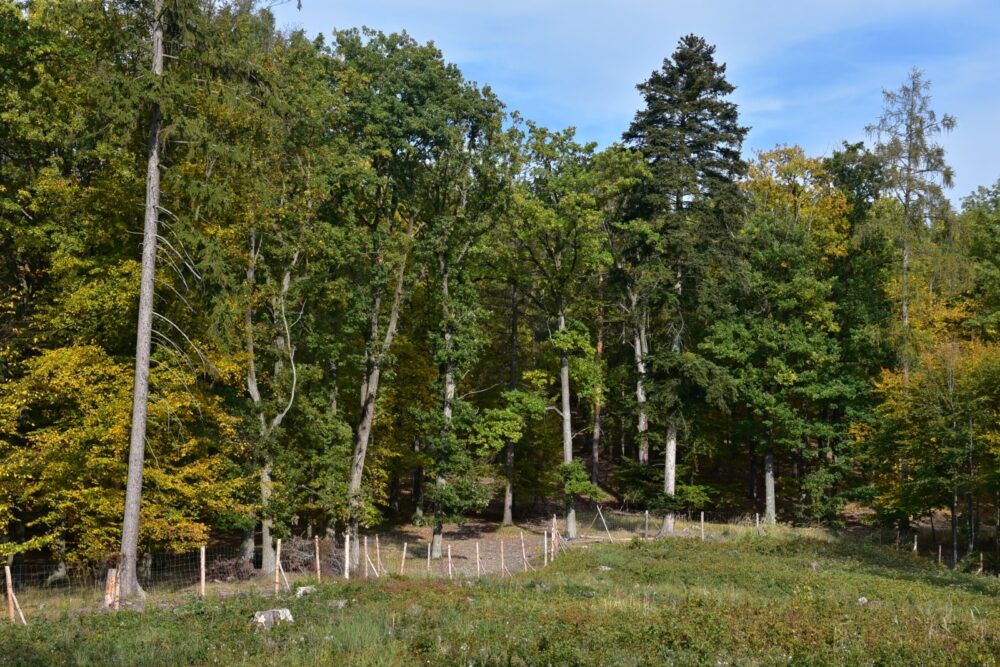
Photo: Natural regeneration of oak and fir within a fenced site, with the surrounding mature stand providing lateral protection. Author Jan Řezáč
The “Forests for a Sustainable Future” partnership is being developed within the European Research Area as a co-funded initiative. This partnership aims to be the primary mechanism for supporting research and innovation in the forestry sector across the European Union in the coming years. Its focus is on mobilizing research and innovation to promote a sustainable, forest-based bio economy, conserve biodiversity, and enhance the resilience of forest ecosystems in the face of climate change. It is expected that between 2026 and 2036, around 200 to 250 research projects will be funded through international calls, with a total budget estimated at over EUR 230 million.
The Strategic Research and Innovation Agenda (SRIA) outlines four key thematic areas for future forestry research at the European level: (A) resilient forests, (B) diversified forest management, (C) innovative forest products and the bio economy, and (D) the societal and governance framework for transforming the sector.
Scientists from the Science and Research Section of the National Forest Centre in Zvolen have assessed the alignment between the national forestry research priorities of Slovakia and the Czech Republic and the Strategic Research and Innovation Agenda (SRIA) of the upcoming European FOREST Partnership. Their findings were published in an article titled „Priority lesníckeho výskumu na Slovensku a v Česku v kontexte Strategickej výskumnej a inovačnej agendy Partnerstva FOREST“ (Forestry research priorities in Slovakia and Czechia in the context of the Strategic Research and Innovation Agenda of the FOREST Partnership), which appeared in the journal Zprávy lesnického výzkumu (Reports of Forestry Research). Their conclusions and recommendations are also highly relevant to the Czech Republic.
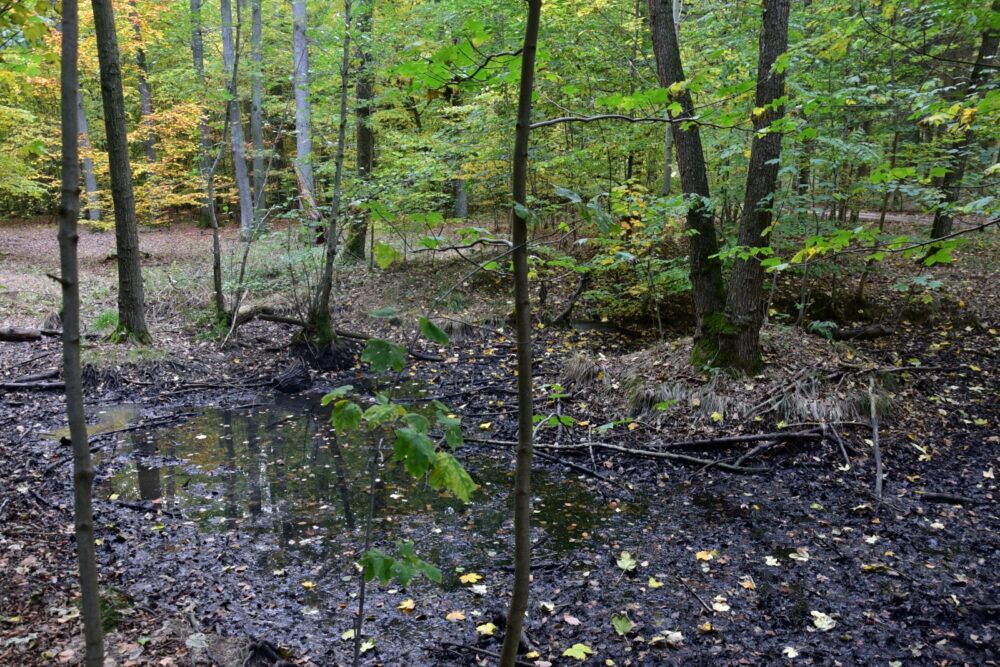 Photo: A wetland featuring alder, maple, and oak retains water even during drought periods. Author Jan Řezáč
At the beginning of the study, the researchers posed three key questions:
- RQ1: What are the main thematic priorities in current forestry research in the Czech Republic and Slovakia?
- RQ2: How well do these priorities align with the Strategic Research and Innovation Agenda (SRIA)?
- RQ3: What is the structure of forestry research funding in the Czech Republic and Slovakia, categorized by source and by the thematic areas outlined in the SRIA?
A systematic analysis of available documentation on the development of forestry research in Europe reveals a significant imbalance both thematically and geographically. Among the more than 35,000 sources identified, topics such as forest management, biodiversity, and climate change were predominant. In contrast, forestry technologies and forest products were addressed to a much lesser extent. Moreover, the data reveals a notable geographic disparity, with Central and South-eastern Europe being less represented compared to the northern, western, and Mediterranean regions of the continent. These findings suggest that information regarding the structure of research is not balanced either thematically or regionally.
The researchers conclude that current forestry research in the Czech Republic and Slovakia is primarily focused on diversified forest management and the resilience of forests and landscapes, with the bio economy also being a key area of interest in the Czech Republic (RQ1). The forestry research priorities in both countries are largely aligned with the Strategic Research and Innovation Agenda (SRIA) (RQ2), which lays the groundwork for their engagement with the thematic priorities of the FOREST partnership.
The strongest alignment was observed in the areas of forest and landscape resilience, diversification of forest management, and the bio economy. However, societal, political, and governance aspects remain underrepresented in both countries—an issue that may contribute to the slower development of these areas.
The financing structure for forestry research (RQ3) varies between the Czech Republic and the Slovak Republic. The Czech Republic has a stronger domestic project base and a higher overall volume of funding. In contrast, the Slovak Republic relies more heavily on European funding sources. This difference is evident in the varying project and institutional capacities of the two countries.
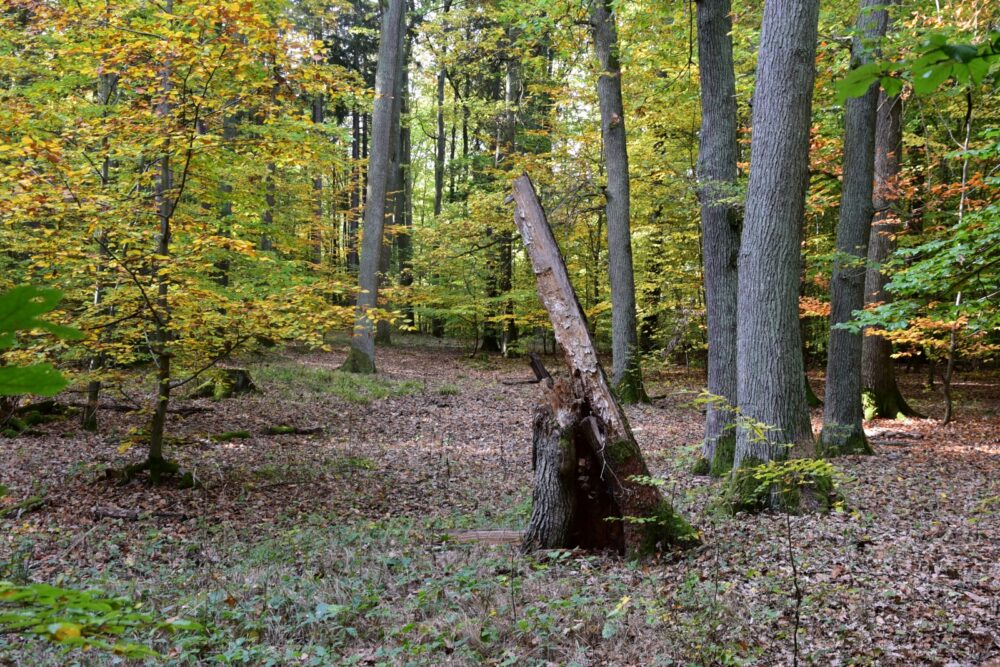 Photo: Dead wood serves as a habitat for many organisms and enhances forest biodiversity. Author Jan Řezáč
The results of the FOREST partnership readiness analysis indicate that both countries have a favourable thematic profile for collaboration, although they differ in project and financial capacities. The Czech Republic has a more robust foundation for stable project involvement, while Slovakia relies more on European funding sources. However, Slovakia also demonstrates good potential for active participation in international consortia.
Both countries show a notable lack of research focused on social, political, and governance aspects (Theme D), which may lead to a limited knowledge and innovation base in these areas.
In Slovakia, there is a need to strengthen national research capacity and diversify funding sources beyond the currently dominant European ones. For the Czech Republic, it would be beneficial to provide targeted support for underrepresented themes, particularly in the bio economy and the social aspects of forestry. Additionally, increasing participation in projects that require higher levels of coordination is advisable.
For both countries, it is crucial to systematically develop research on governance, policy, and innovation ecosystems. Although this area is currently somewhat marginal, it is essential for achieving strategic objectives.
For countries like the Czech Republic and Slovakia, participating in this partnership can enhance the sharing of research resources focused on priority areas identified in strategic documents. It can also help align national research activities more closely with European goals, encouraging research organizations to engage in joint projects based on topics that currently dominate national research agendas. These topics include innovative approaches to forest management, adaptation to climate change, biodiversity conservation, and the sustainable use of forest resources.
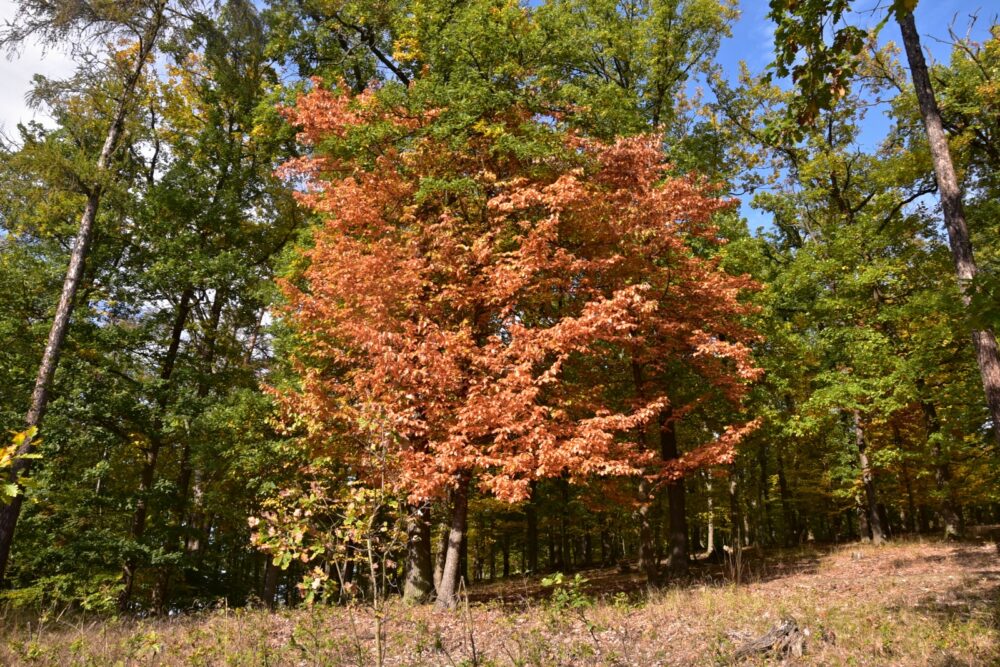 Photo: The wild service tree (Sorbus torminalis) is a relatively rare component of our forests. Author Jan Řezáč
The ability to fully capitalize on research opportunities is closely tied to research capacity and the availability of financial resources. Limited research funding can negatively impact the visibility of the research landscape in the Czech Republic and Slovakia, potentially leading to lower participation rates from organizations in these countries in Horizon 2020 (HE/2020) projects.
Strategic research agendas are often developed in a context where countries with greater research capacity and stronger representation in European Union framework programs have a more significant influence. Countries like Germany, Spain, Italy, France, and the Netherlands exhibit the highest participation rates in HE/2020 projects.
As a result, the research priorities and thematic directions of European initiatives may reflect the specializations and research traditions of these dominant countries. There is also a risk of thematic and regional imbalance in the planned FOREST partnership due to a more substantial presence of organizations that fund forestry research, as well as forestry research entities, from Western and Northern Europe. This dominance may shape the thematic focus of future calls, given that research priorities typically align with the strengths and research traditions of countries that have a significant presence in strategic initiatives.
This analysis underscores the importance of active engagement by research organizations from Central Europe in European forestry research initiatives, especially since EU resources constitute a substantial portion of forestry research funding.
The paper „Priority lesníckeho výskumu na Slovensku a v Česku v kontexte Strategickej výskumnej a inovačnej agendy Partnerstva FOREST“ (Forestry research priorities in Slovakia and Czechia in the context of the Strategic Research and Innovation Agenda of the FOREST Partnership) can be downloaded here.
Authors: Zuzana Sarvašová, Jan Válovčan, Rastislav Raši; Národní lesnické centrum, Sekce pro vědu a výzkum (National Forestry Centre, Science and Research Section), Zvolen; e-mail: jan.valovcan@nlcsk.org
Prepared by Jan Řezáč, based on the original. VÚLHM, v. v. i., e-mail: rezac@vulhm.cz