

Ponderosa pine in the European Forestry: Its potential and practical recommendation
 In the magazine *Frontiers in Forests and Global Change*, a paper has been published about ponderosa pine (Pinus ponderosa) by an international team of authors. This paper summarizes the current knowledge related to the silviculture of this species, both in its native region of North America and as an introduced species in Europe.
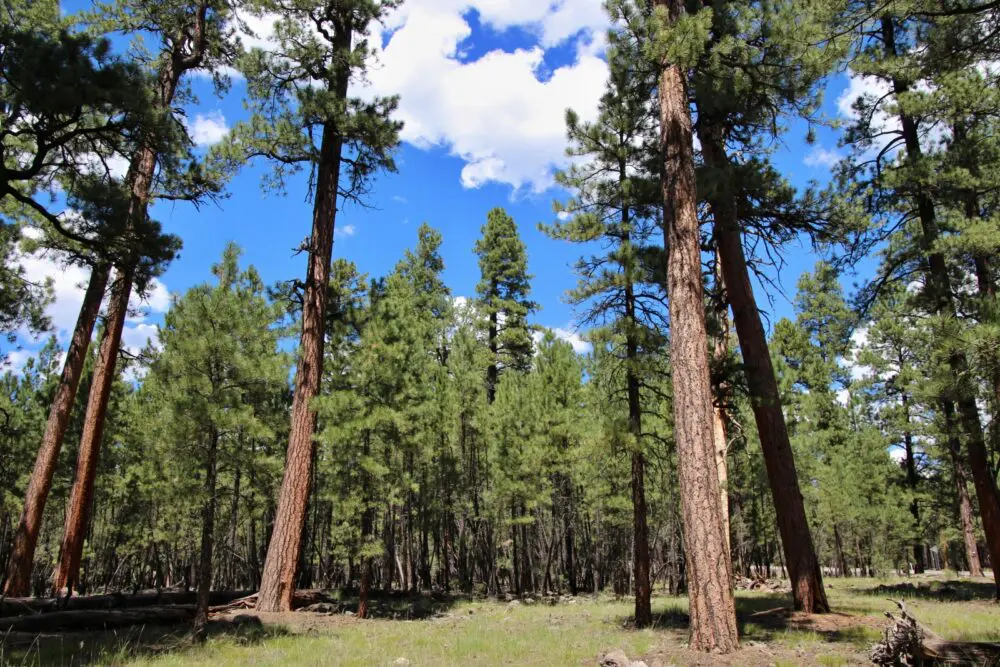
Photo: Ponderosa pine in its native conditions of North America, author Zdeněk Vacek
The case study highlights the high ecological stability of ponderosa pine, its good adaptability to drought and climate extremes, and its promising production potential not only in its original regions but also in Central Europe. Additionally, the paper raises important questions regarding silvicultural recommendations and emphasizes the need to test mixture stands of this tree species alongside local tree species. Overall, this paper represents a significant contribution to the field on an international level.
The authors conducted a comparative analysis of results from both domestic and introduced sites, focusing on ecology, cultivation, production, wood properties, risks, and adaptation to climate change. In European conditions, ponderosa pine demonstrates rapid growth, particularly in warmer and drier habitats. In research trials in the Czech Republic, a 45-year-old stand yielded approximately 430 m³/ha. The wood produced is of high quality, easy to work with, and suitable for a wide range of applications.
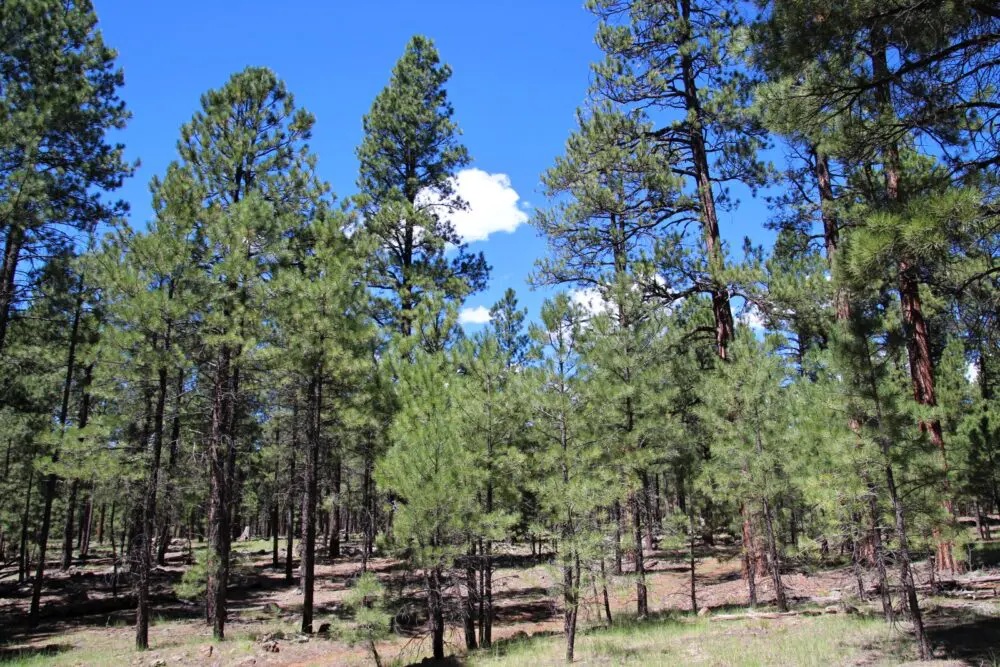 Photo: Ponderosa pine with clear traces of fire on the tree stem, by Zdeněk Vacek
From a cultivation and protection perspective, the study highlights specific challenges related to natural regeneration following fires in the original habitat, such as limited seed dispersal and slow rejuvenation. It also stresses the importance of managing crop density. In areas prone to frequent droughts and a high risk of fires, stands with lower density are recommended.
In Europe, there have been no reports of invasive manifestations of this species so far. However, in the southern hemisphere—such as Argentina, Australia, Chile, and New Zealand—the ponderosa pine has been observed to be locally invasive. Therefore, the authors recommend consistent monitoring and exercising caution, even under our conditions.
Implications for Practice:
- In habitats that are at risk of drought, opt for a lower stand density to promote growth stability and better manage water resources.
- Identify suitable provenances and experiment with mixtures of native tree species, as there is limited guidance on effective combinations for mixed stands.
- Timely and appropriate measures should be taken to minimize weed competition in young stands, and consider protecting crops from wildlife.
- Implement cultivation practices that lower the risk of fires, such as silvicultural interventions and creating fire protection strips without vegetation.
- Continuously monitor the health of the stands and keep an eye out for any potential unwanted spread outside of cultivated areas over the long term.
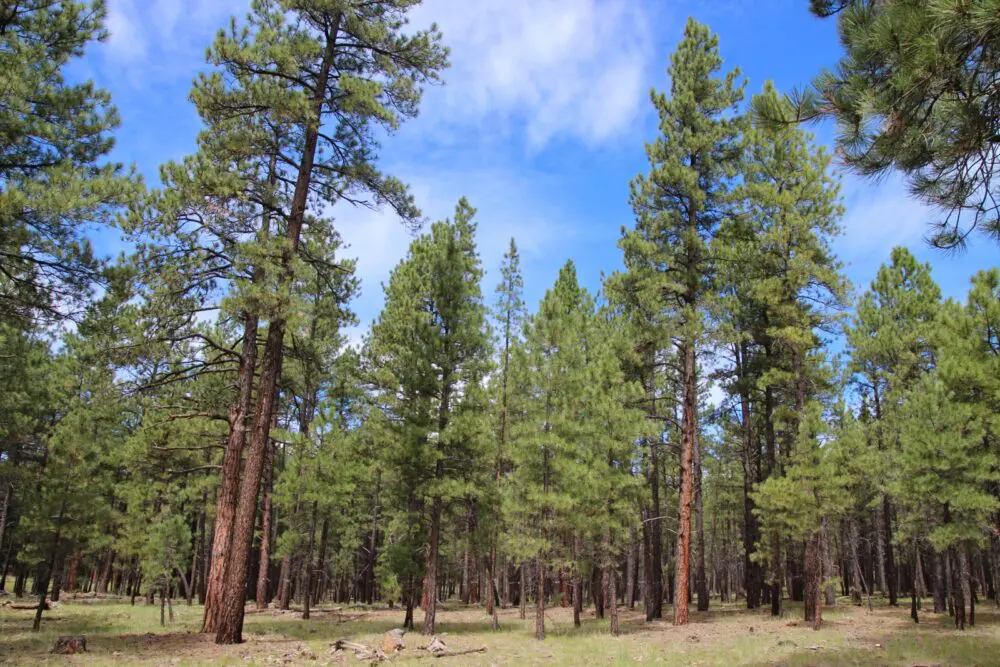 Photo: Ponderosa pine in its native conditions of North America, author Zdeněk Vacek
The study concludes that ponderosa pine is a promising tree species for certain locations in Central Europe. It demonstrates good tolerance to heat and drought, strong production parameters, and produces high-quality wood. To safely and effectively harness its potential, it is essential to proceed with caution. This includes verifying growing recommendations through long-term trials, assessing its impact on biodiversity, and considering regional risks such as fires and pests.
The original paper titled “Unlocking Pinus ponderosa (Douglas ex C. Lawson) Potential: A Comprehensive Review of Results from Native and Introduced Areas” (Odhalení potenciálu Pinus ponderosa (Douglas ex C. Lawson): komplexní přehled výsledků z původních a introdukovaných oblastí) available for free download here.
Authors: Karol Tomczak (Česká zemědělská univerzita v Praze, Fakulta lesnická a dřevařská; Poznań University of Life Sciences; Poznań Institute of Technology); Zdeněk Vacek, Václav Bažant, Aleš Zeidler, Václav Trojan, Josef Gallo (Česká zemědělská univerzita v Praze, Fakulta lesnická a dřevařská); Jan Cukor (Česká zemědělská univerzita v Praze, Fakulta lesnická a dřevařská; Výzkumný ústav lesního hospodářství a myslivosti, v. v. i.); Jakub Černý (Výzkumný ústav lesního hospodářství a myslivosti, v. v. i.)
Prepared according original by Jakub Černý, VÚLHM, v. v. i., e-mail: cerny@vulhmop.cz