

How can we maintain and increase the carbon stock in forest soils?
 Carbon is a fundamental building block of all living matter. It is also a key component of carbon dioxide, a significant greenhouse gas that contributes to global warming. Since the pre-industrial period in 1750, the atmospheric concentration of carbon dioxide has risen by approximately 45%.
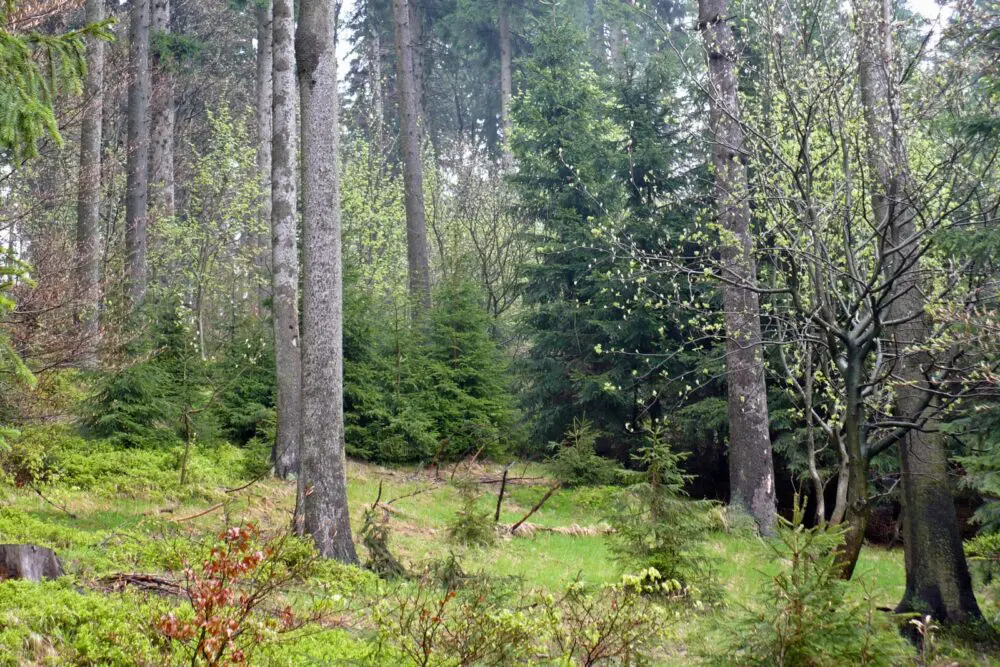
Photo: A structurally rich stand resulting from development in the conditions of the inner edge of the cutting regeneration; archive of the VÚLHM
If we exclude the upper layers of the Earth’s crust and the deep layers of the oceans, the amount of carbon stored in vegetation and soil far surpasses that found in the atmosphere. However, the relationship between soil carbon and atmospheric carbon is remarkably close due to soil respiration, making soil carbon sequestration significant for the concentration of carbon dioxide in the atmosphere.
Forests around the world account for 45% of the carbon stock on the Earth’s surface, with a substantial portion of this stock located in the soil. Soil serves as the primary carbon reservoir in all terrestrial ecosystems and across diverse types of vegetation. Climate change models indicate that we can expect an increase in the rate of carbon release from the soil and a decrease in soil carbon stocks. Therefore, it is essential to focus more on forest soils as a crucial component of the global carbon cycle.
The research teams at VÚLHM have been addressing this issue for an extended period across various projects. One significant output from the project funded by the Technology Agency of the Czech Republic, No. SS06010148, titled “Quantification of carbon stocks in forest soils of the Czech Republic and the potential for influence through forestry management” (Kvantifikace zásob uhlíku v lesních půdách ČR a možnost jejího ovlivnění lesnickým hospodařením), has led to the development of a practical methodological guide. This guide is called „Lesnické hospodářské postupy ve vztahu k zásobě uhlíku v lesních půdách” (Forest management approaches related to the forest-soil carbon stock), which was completed this year.
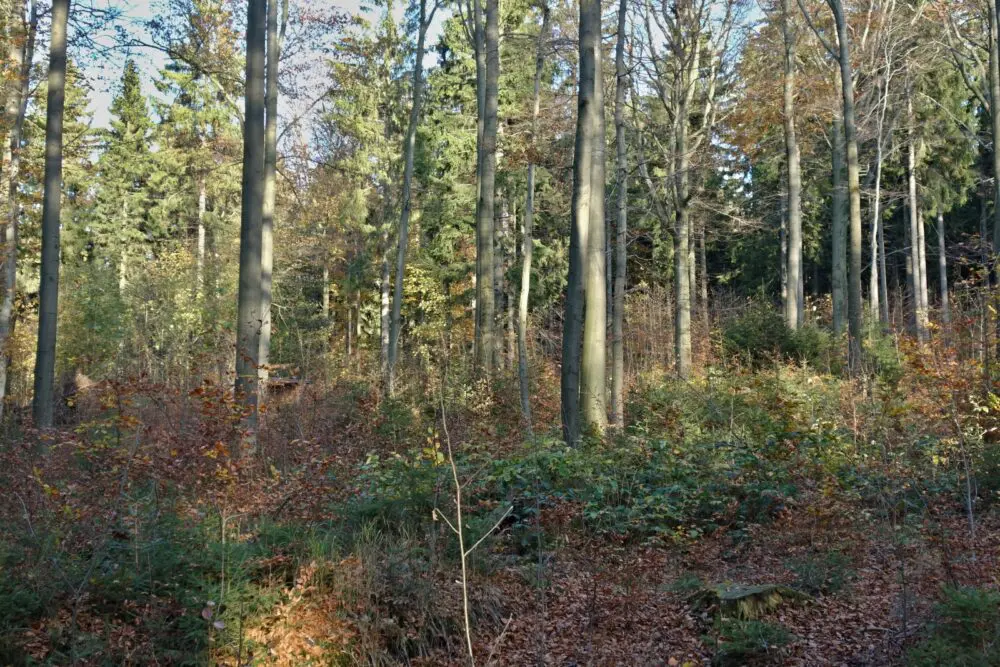 Photo: Successful regeneration of spruce, beech, and fir stands; archive of the VÚLHM
The authors have developed recommended practices for forestry that can help maintain or increase carbon stocks in forest soils. These practices vary based on the type and goals of the management measures being implemented. Additionally, the methodology outlines measures that may pose risks to the maintenance of carbon stocks in forest soils. This comprehensive set of recommendations represents a significant advancement in forestry management aimed at preserving or enhancing carbon stocks.
A key requirement for carbon storage in forest soils is the continuity of vegetation cover. Therefore, the clear-cutting management method, which temporarily alters the vegetation conditions in an area and consequently affects the input of organic matter through litter into the soil, is often viewed critically. This management technique typically leads to a reduction in total soil carbon stocks, and its effects can be noticeable for several decades.
Recent findings indicate that the management of mining residues is crucial for the development of soil organic carbon stocks in newly cleared areas. When these residues are removed and utilised, for instance, as wood chips for energy production, there is a significant decline in carbon stocks. Conversely, if the residues are left in place-either as wood chips or partially incorporated into the soil-the decomposition of this wood material leads to increased respiration rates, allowing the carbon stock in the soil to rise.
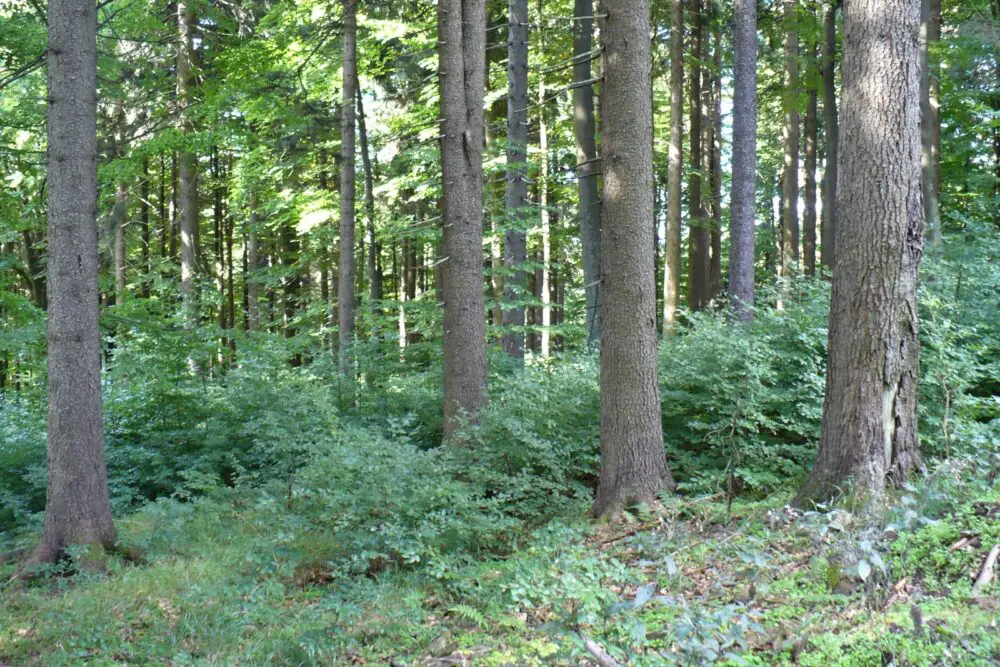 Photo: Abundant natural beech regeneration observed under the canopy of a mature mixed stand within the beech-spruce vegetation stage; archive of the VÚLHM
A key element in carbon storage is represented by young stands, which develop either from forest regeneration (the renewal of stands on forest land) or, more notably, from afforestation (the establishment of new stands) on agricultural soils.
There is a potential risk to the expected carbon storage in woody biomass due to reduced growth caused by more frequent drought periods. It is evident that numerous factors influence the carbon stock and cycle in forest soils, with one significant factor being the choice of forestry management practices.
To support carbon storage in forest soils, the following recommendations are suggested:
- When restoring stands and afforesting, choose habitat-appropriate tree species. Prioritise a higher proportion of broadleaf trees and deeper-rooting conifers, and support tree species with good volume growth, including some non-native species.
- Opt for non-severe management methods but also incorporate small-scale clear-cutting as a way to enhance the proportion of light-loving tree species.
- In the case of post-disaster clear-cutting, diversify the stand structure by implementing two-phase restoration with preparatory tree species.
- Avoid reducing standard pruning practices unless the health of the stand is compromised due to issues such as deterioration, pest outbreaks, unsuitable species, or poor genetic structure. Conversely, disproportionate delays in restoration can lead to a decline in health and stability, increasing the likelihood of disturbances that negatively impact soil carbon stocks.
- Do not use clear-cutting methods; instead, leave logging residues on-site unless there is a significant risk of pest spread or fire. If appropriate, chip and incorporate logging residues into the upper layers of the soil to accelerate or facilitate the restoration process, whether that be natural, artificial, or combined.
- For new afforestation, support the rapid integration of stands by paying closer attention to crop care and growth. This is particularly important for enhancing stability through training interventions, especially on former agricultural lands where tree growth dynamics may be greater.
- Execute training interventions, especially pruning, promptly and with consideration for the ecological requirements of individual tree species or their mixtures.
Scientists identify several practices in forestry management that pose significant risks:
- Loosening the canopy of forest stands or disturbing the soil beneath them without subsequent restoration efforts.
- Delaying educational initiatives or implementing them insufficiently.
- Neglecting measures to combat the spread of catastrophic pests and the large-scale occurrence of fires.
- Using the tree-based logging method.
- Removing secondary stand materials and logging residues.
- Reducing the overall area of forests that contain stands.
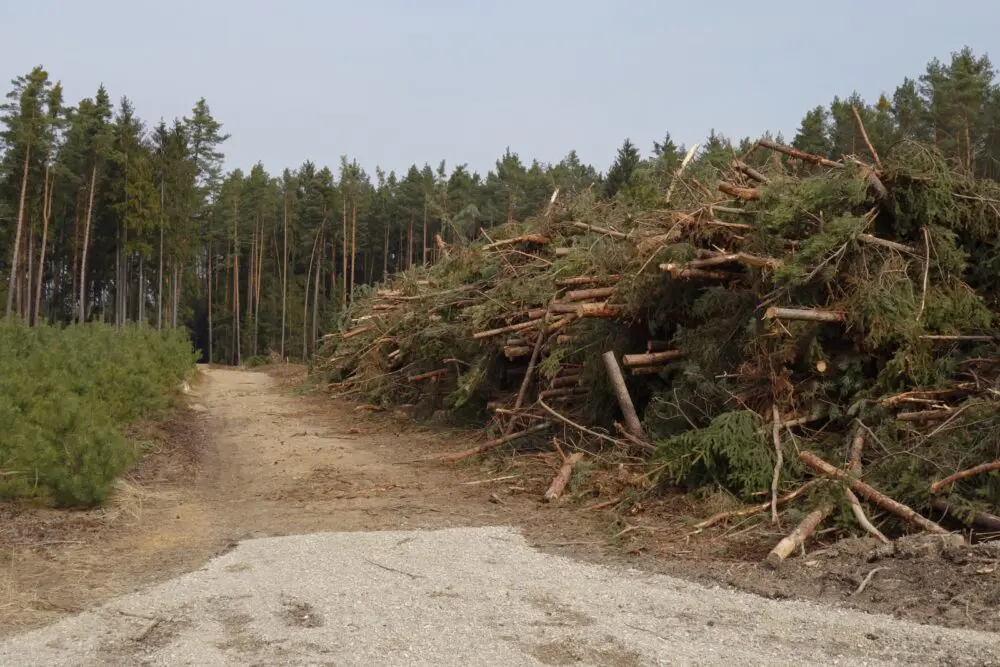 Photo: Logging residues prepared for using plant biomass for energy; this measure not only decreases carbon stocks in the forest ecosystem but also significantly reduces other nutrients; the VÚLHM archive
The recommendations outlined in the methodology help maintain or increase carbon stocks in forest soils. While neglecting these recommendations may not cause a significant loss of soil carbon in the short term, it could result in a higher risk of a long-term decline, making it difficult to restore the original carbon stocks.
Sequestering and storing carbon in biomass and soil are crucial aspects of forestry, and their economic importance is likely to become more apparent in the near future. Currently, the financial evaluation of these forest functions in the Czech Republic relies on individual contractual agreements. In the future, stable economic benefits are expected to be linked to the stronger adoption of new economic instruments, such as carbon offsets.
The methodology „Lesnické hospodářské postupy ve vztahu k zásobě uhlíku v lesních půdách” (Forest management approaches related to the forest-soil carbon stock) can be downloaded here.
Authors: Ing. Jiří Novák, Ph.D., Ing. Ondřej Špulák, Ph.D., Ing. Dušan Kacálek, Ph.D., doc. Ing. Vít Šrámek, Ph.D., Ing. Věra Fadrhonsová, Mgr. Kateřina Neudertová Hellebrandová, Ph.D.
Prepared according original by Jan Řezáč, e-mail: rezac@vulhm.cz