

Drought patterns in forests differ from those in agricultural fields
 From September 23 to 25, the third “Forest Hydrology – Science and Practice” (Lesnická hydrologie – věda a praxe) conference was held in Rejvíz, located in the Jeseníky Mountains. The event was organised by the Forestry and Game Management Research Institute (VÚLHM). A total of 52 participants from 18 institutions attended, primarily from the Czech Republic, but also from Slovakia.
The conference served as a platform for scientists, experts, and representatives from organisations involved in landscape water management, including forest owners and watercourse administrators, to gather and exchange information. Recent extreme weather events, such as the floods that affected the North Moravia and Silesia regions in 2024, as well as the exceptionally hot and dry summer experienced this year, made the conference particularly relevant.
Long-term measurements conducted across various forest catchments show that rising temperatures, even with relatively stable levels of precipitation, lead to increased evaporation. This phenomenon raises the risk of drought and reduces water runoff from these areas. Additionally, warmer winters and decreasing snowpack water reserves create further challenges. Furthermore, the progression of drought in forests and its impact on trees represents unique issues that differ from the conventional definitions of meteorological or agricultural drought.
 Different tree species use various strategies for managing water within ecosystems, and these strategies can change depending on the current availability of soil water. In our region, we have extensive data on spruce and beech trees, while the behaviour of other tree species remains insufficiently studied. The hydrological balance of the forest is also vital for replenishing groundwater reserves.
The presentations clearly highlighted that scientific institutions, including universities and research institutes, possess a wealth of data that could be beneficial if shared, jointly analysed, and interpreted. Additionally, attention was directed toward the role of deadwood and the moss layer in the hydrological cycle, as well as the effects of chipping logging residues on the water regime of forest soils, tree health, and the successful establishment of new plantings.
A thorough discussion took place regarding forest soil erosion, which typically appears as rills in areas impacted by forestry machinery following heavy rainfall. Strategies for mitigating soil erosion were explored, including the proper routing of road networks, technical measures, and effective methods for remediating existing erosion rills. Representatives from Šumava National Park, Military Forests and Estates, the National Forestry Centre (Zvolen), and Aqua Terra Inova shared examples of initiatives aimed at peatland restoration, landscape water retention, and preventing erosion events.
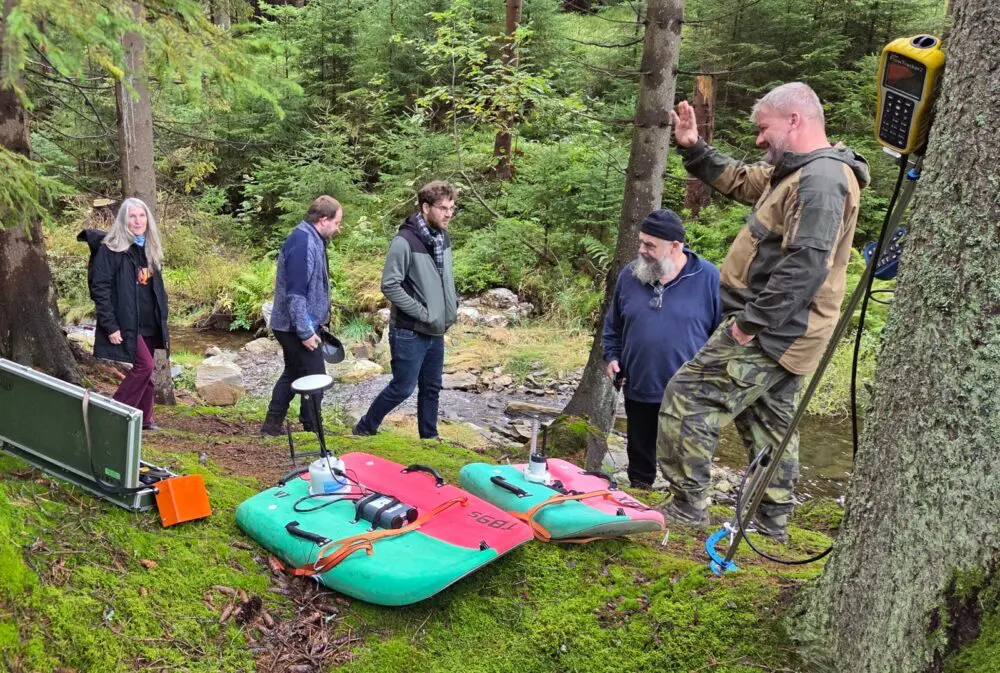
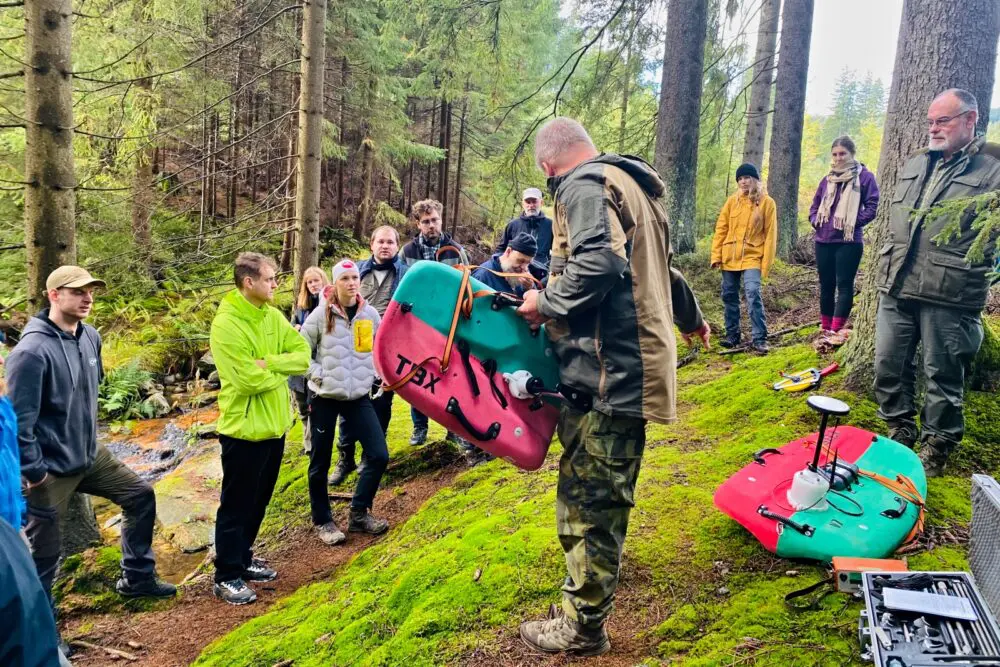
These practical experiences were further examined during a field trip to the forest properties owned by the Diocese of Ostrava-Opava (Vrbno Forest District), where hydrological monitoring is being conducted in collaboration with VÚLHM and the Czech Hydrometeorological Institute.
The conference was organised as part of the National Agency for Agricultural Research project QL24010054, titled “Impacts of Climate Change on Small Forest Catchments and Possibilities for Mitigation through Forestry Management and Water Management Measures” (Dopady klimatické změny na malá lesní povodí a možnost jejich zmírnění prostřednictvím lesnického managementu a vodohospodářských opatření).
Prepared by doc. Ing. Vít Šrámek, Ph.D.; sramek@vulhm.cz
Illustrative photo: Conference participants visited research facilities for hydrometeorological measurements on forest land owned by the Diocese of Ostrava-Opava (Vrbno Forest Administration) during an excursion; archive of VÚLHM, v. v. i.