

To properly restore areas affected by disasters, it is essential to carefully select suitable tree species
In the past two decades, the Czech Republic has experienced an unprecedented increase in disaster clearings caused by the spread of the spruce bark beetle, wind damage, and droughts. These clearings cover tens of thousands of hectares, posing significant challenges for forest restoration, maintaining ecosystem services, and supporting economic functions. To facilitate the return of the forest, it is crucial to creatively employ a variety of restoration methods and utilise a diverse range of tree species, including pioneering or preparatory tree species.
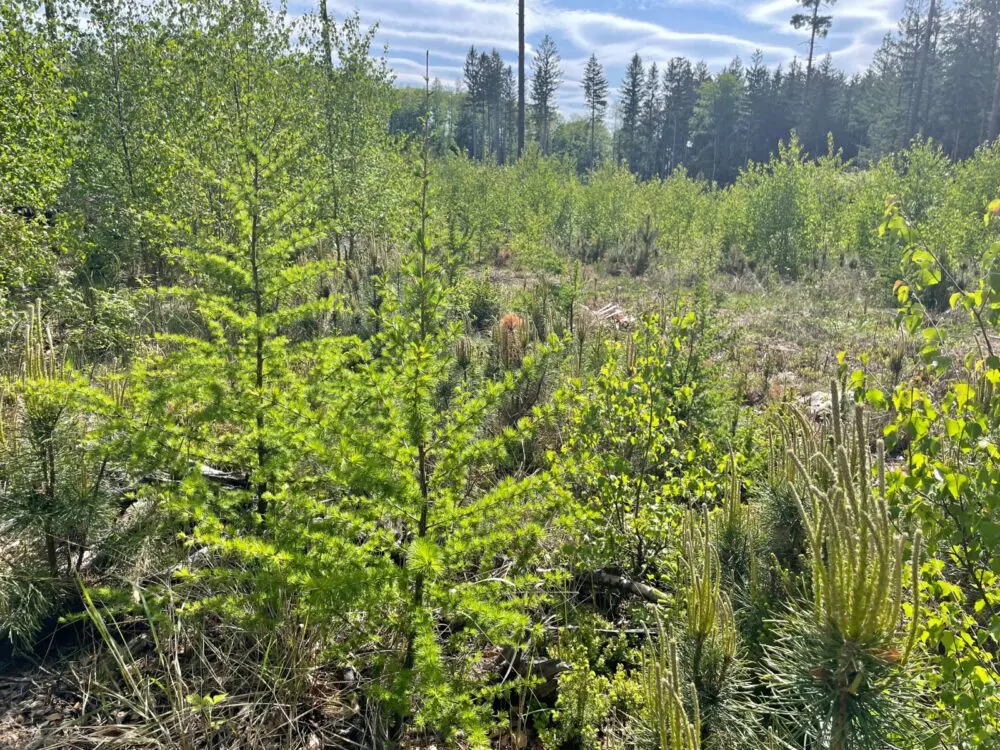 Photo: Early stage of restoring a disaster area using natural rejuvenation of silver birch, combined with Scots pine and European larch; archive of the methodology authors
For a long time, teams of scientists representing various institutions have been addressing the issue of restoring (afforesting) disturbed forest and non-forest areas. One of the most recent contributions to this field is a certified methodology focused on selecting preparatory tree species (Volba přípravných dřevin pro zajištění melioračního efektu mladých porostů po obnově kalamitních holin a degradovaných stanovišť). This methodology aims to enhance the amelioration effect of young stands following the restoration of calamity clearings and degraded habitats. It was developed by researchers from VÚLHM, v. v. i., and Charles University as part of the research project TAČR TQ03000234, titled “Amelioration Potential of Pioneer Tree Species in the Restoration of Calamity Clearings and Degraded Habitats” (Meliorační potenciál pionýrských druhů dřevin při obnově kalamitních holin a degradovaných stanovišť).
The methodology offers comprehensive guidance for selecting appropriate tree species based on their quantitative and qualitative effects on soil and ecological improvement. It includes recommendations for suitable combinations of preparatory and target tree species, along with an overview of the expected benefits for enhancing soil and ecological conditions.
In addition to calamity clearings in forested areas, degraded habitats of anthropogenic origin pose a significant challenge. This includes issues like mine dumps and pollution clearings in the mountains of northwestern Bohemia, as well as soils affected by erosion. These environments are characterised by the absence of a humus layer, extreme physical and chemical conditions, and challenging conditions for natural forest regeneration. Successful stabilisation and afforestation of these areas are essential for landscape enhancement, water management, and recreational purposes.
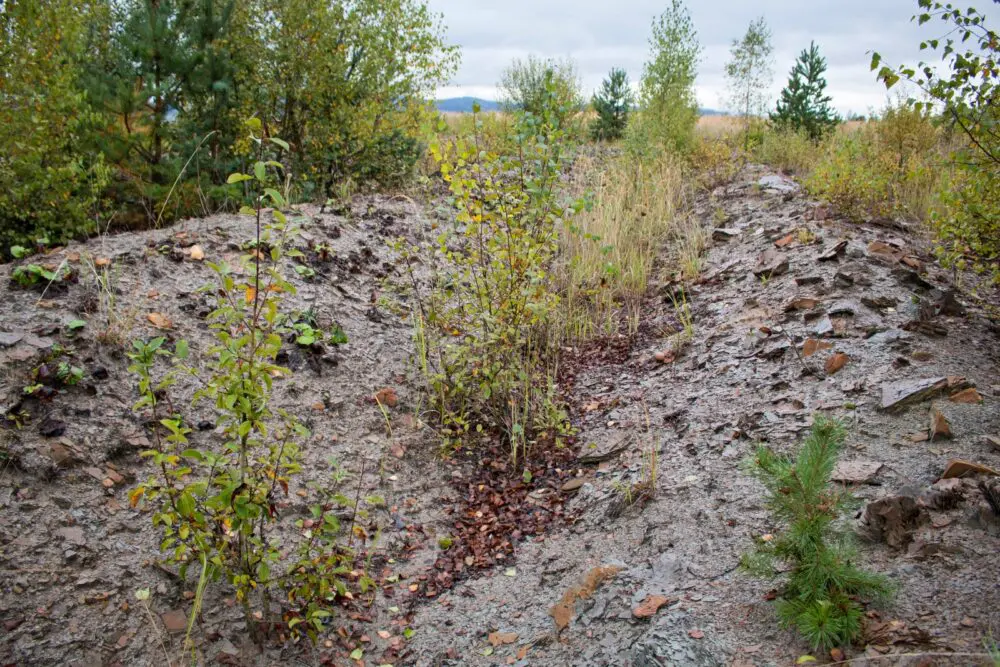 Photo: Dump areas left for spontaneous development are quickly colonised by pioneer tree species in their initial years, archive of the methodology authors
Preparatory (pioneer) tree species play a vital role in the natural succession process. These are fast-growing, light-demanding tree species that can cover large open areas, creating a canopy that initiates forest renewal. Their ecological strategy helps bridge the gap during the period when the target (climax) tree species are unable to survive and grow in cleared or degraded areas.
Choosing the right pioneer tree species is crucial for restoring forests in areas affected by disasters or degradation. Different pioneer tree species have varied ecological characteristics, growth rates, and levels of amelioration effects. Some of them provide rapid canopy cover and soil protection, while others enhance soil fertility through nitrogen fixation or boost biodiversity. However, it is important to consider their limitations as well, such as a short lifespan, the risk of precocity (where pioneer tree species outgrow the target species), susceptibility to diseases, or pressure from wildlife.
The methodology provides a summary of the key characteristics of the most important preparatory tree species, along with their benefits and limitations. This information is clearly organised in tables. The methodology covers the use of silver birch, white birch, black alder, speckled alder, European aspen, European mountain ash, goat willow, continental purple willow, European larch, sycamore maple, Norway maple, field maple, and sessile oak.
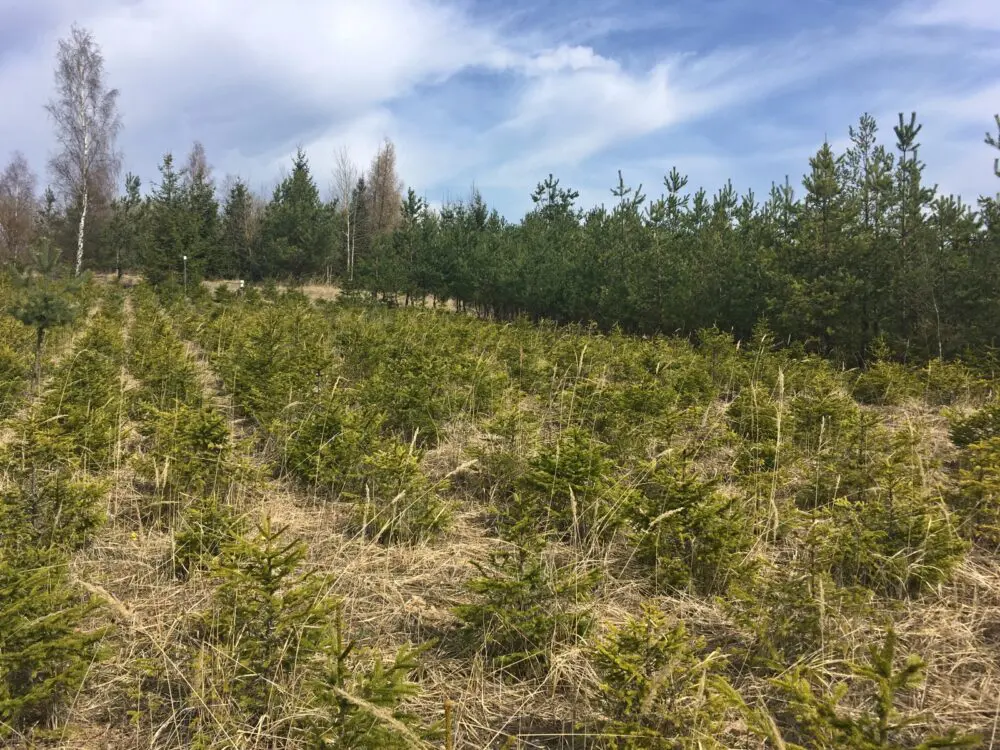 Photo: One common method of forestry recultivation involves planting target tree species, such as spruce, directly into the substrate of the dump; archive of the methodology authors
Practical experience in forest restoration has shown that the effectiveness of various procedures significantly depends on the type of habitat. Scientists have summarised their findings as follows:
- In areas cleared by disasters, using pioneer species is the most cost-effective method to quickly establish a stand and prepare the soil and microclimate for the targeted tree species.
- In dumps and other degraded habitats, employing pioneer tree species is often the only feasible option for restoration, as direct afforestation with target tree species tends to be either unsuccessful or prohibitively expensive.
- A two-phase restoration approach combines ecological benefits (such as improved habitat quality, soil stabilisation, and humus accumulation) with cost savings, representing an adaptive strategy that is highly efficient.
The methodology builds on previous research while introducing several significant enhancements to existing procedures:
- For the first time, a systematic approach is provided for selecting a preparatory tree species based on its amelioration effects. This selection process considers not only the rapid growth and canopy formation of pioneer tree species but also their impact on soil fertility, microclimate, hydrology, and support for biodiversity.
- This methodology is also the first to address degraded habitats, particularly mine dumps and other anthropogenic substrates, which were overlooked in earlier methodologies. It offers recommendations for selecting suitable pioneer tree species and their combinations with target tree species in these specific conditions.
- Additionally, the methodology includes a practical decision matrix that helps forest managers quickly determine the appropriate preparatory tree species based on the habitat type and the desired amelioration effect.
Thanks to these elements, the methodology expands existing knowledge and provides forestry practice with a comprehensive and applicable tool for effective forest restoration on both disaster clearings and degraded habitats.
Methodology Selection of preparatory tree species to ensure the amelioration effect of young stands after restoration of disaster clearings and degraded habitats (Volba přípravných dřevin pro zajištění melioračního efektu mladých porostů po obnově kalamitních holin a degradovaných stanovišť) is available for download here.
Authors: Ing. Jakub Černý, Ph.D., Ing. Jan Leugner, Ph.D., VÚLHM, v. v. i. VS Opočno; RNDr. Olga Vindušková, Ph.D. prof. Ing. Mgr. Jan Frouz, CSc. Univerzita Karlova; e-mail: cerny@vulhmop.cz
Prepared according original by Ing. Jan Řezáč, VÚLHM, v. v. i., e-mail: rezac@vulhm.cz